
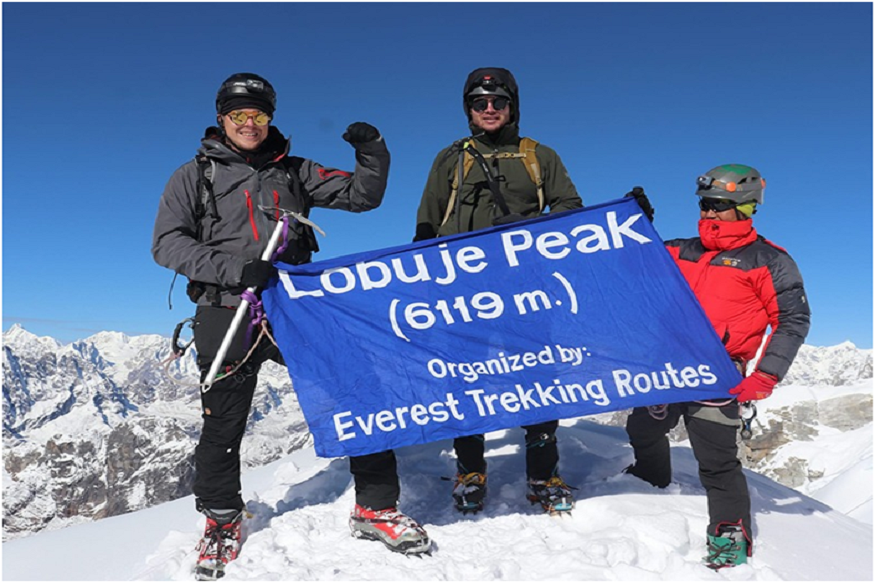
There is a moment in the Himalayas when you stop walking, not because you are tired, but because your heart feels too full. The mountains stand quiet, like they were here long before us and will stay long after. This article is about those moments. About high places where legs shake, lungs burn, and the mind becomes clear in a strange way. This is a human story of Island Peak, Lobuche Peak, Mera Peak, and the wild walk of the Everest Three Passes Trek. Not perfect words, just honest ones.
Why do these mountains pull people from far away?
Some people come to Nepal for photos. Some come for adventure stories to tell later. But many come because something inside them is restless. These peaks are not easy. They don’t welcome you quickly. They make you slow down, they make you doubt, and then slowly they give you trust. That feeling is rare in normal life.
You don’t just climb a mountain here. You walk through villages, drink tea with strangers, sleep in cold rooms, and wake up before sunrise feeling nervous and excited together. The journey changes shape every day. That is the real magic.
Island Peak climbing feels small but strong.
Island Peak climbing looks small on paper. Just over 6,000 meters; people say it like it is nothing. But when you stand below it, it feels sharp and proud. The name comes from how it looks, like an island rising from ice and rock. And honestly, it feels like an island too, lonely and beautiful.
The walk to Island Peak slowly builds your confidence. You pass Namche, Dingboche, and Chhukung. Each place has its own mood. You meet climbers who are quiet and some who talk too much because they are scared. On summit day, everything becomes simple. One step, one breath. Crampons bite the ice, the rope feels tight in your glove, and suddenly the sun rises in a way you never forget.
Reaching the top does not make you loud. It makes you silent. You don’t feel like shouting. You just stand and look.
Lobuche Peak climbing is more serious, more raw.
Lubuche Peak climbing feels different from the start. It carries a heavier energy. The mountain sits near the Khumbu Glacier, surrounded by giants like Nuptse and Everest. The air feels colder here, even in your thoughts.
This climb demands more focus. The route is steeper and the terrain more technical. Fixed ropes, icy sections, and exposed ridges. It is not just about strength; it is about a calm mind. If your head is messy, Lobuche will show it clearly.
The reward is not just the summit. It is the view of the entire Everest region laid out below you. Peaks stacked behind peaks, like waves frozen in stone. Many climbers say Lobuche makes them feel small, but in a good way. Like reminding you where you belong.
Mere peak climbing gives space to breathe.
Mera Peak Climbing is wide open and surprisingly gentle in spirit. It is the highest trekking peak in Nepal, but it doesn’t shout. It whispers. The trail goes through quiet forests, remote valleys, and places where you might walk for hours without seeing another group.
This climb is long. Days feel slow. But slow is good here. Your body adjusts, and your mind softens. When summit day comes, the climb feels endless but not aggressive. The slope just keeps going and going until suddenly you are standing higher than almost everything around you.
From the top of Mera, you see five of the world’s highest mountains. Everest, Lhotse, Makalu, Cho Oyu, Kanchenjunga. Seeing them together makes your chest tight. You realize how small one human life is, and somehow that makes life feel lighter.
The Everest Three Passes Trek is a journey that stays with you.
The Everest Three Pass Trek is not about climbing one peak. It is about crossing boundaries again and again. Cho La, Kongma La, and Renjo La. Each pass has its own mood, its own test.
This trek feels wild. Weather changes fast. One morning the sky is blue; the next morning there is snow and wind. You walk over glaciers, along high ridges, and through deep valleys. The views are constant but never boring. Every turn feels like a new postcard.
What makes this trek special is the rhythm. Walk, eat, sleep. Repeat. Your world becomes small, but your mind becomes wide. You start noticing small things. The sound of prayer flags, the taste of simple dal bhat, the way your boots feel heavy at the end of the day.
This trek doesn’t rush you. It teaches patience. And patience, up there, is everything.
The people you meet matter as much as the mountains.
One thing many people forget to mention is the people. Sherpa guides, porters, and lodge owners. They carry stories in their eyes. Some have climbed Everest many times. Some have lost friends to the mountains. They don’t speak about it dramatically. They speak quietly, like it’s part of life.
You learn from them without realizing. How to walk slowly. How to smile when things are hard. How to respect the mountain instead of fighting it. These lessons stay long after the trek ends.
Fear comes, but it doesn’t have to win.
Fear is normal here. Anyone who says they are not scared is lying or not paying attention. You fear the cold, the height, the weather. Sometimes you fear yourself. But fear is not the enemy. It keeps you sharp.
The trick is not to remove fear, but to walk with it. Step by step. Breath by breath. These climbs and treks teach that better than any book or speech ever could.
Why people return again and again
Many people say they will come only once. Most of them come back. Something about these trails pulls you again. Maybe it is an unfinished conversation with yourself. Maybe it is the feeling of being truly alive.
Island Peak gives you confidence. Lobuche gives you respect. Mera gives you peace. Everest Three Passes gives you perspective. Together, they create a story that feels personal, not borrowed.
A Quiet Ending, not a loud one
When you finally leave the mountains, life feels noisy. Roads feel crowded. Phones feel heavy. But somewhere inside, something has shifted. You walk slower. You listen more. You breathe deeper.
These journeys are not trophies. They are mirrors. They show you who you are when things get hard and simple at the same time.
And maybe that is why people keep coming back to these high places. Not to conquer them. But to understand themselves just a little better.
Contact Details
——————————–
Company address: Everest Trekking Routes Pvt. Ltd.
16 Khumbu, Nayabazaar, Kathmandu, Nepal
Mobile: +977-9843467921 (Rabin)
Email: info@everesttrekkingroutes.com
URL:– www.everesttrekkingroutes.com